



 Free shipping & Lifetime warranty



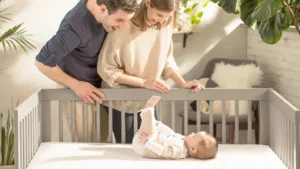


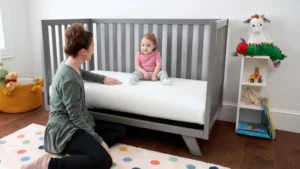









Your baby will spend up to 17 hours a day sleeping, making the crib mattress the most critical item in your nursery. A high-quality baby mattress isn’t just about comfort; it is essential for safety and spinal development. The best crib mattresses are designed to reduce the risk of SIDS (Sudden Infant Death Syndrome) by providing the firm, flat surface pediatricians recommend.
Many parents feel overwhelmed by the options. Should you choose foam or innerspring? Is a breathable crib mattress worth the extra cost? Our guide breaks down the top-rated models, focusing on standard crib mattress dimensions, hygiene, and safety certifications like Greenguard Gold.
 Our top picks for April 2026
 9.9
9.9

 Latex
Latex
Recommended Crib Mattresses
We know finding a good crib mattress is stressful. Based on safety tests, hygiene, and durability, these are our top crib mattress recommendations and the best rated crib mattresses for babies and toddlers.
What Are Your Baby’s Mattress Needs?
Babies have different sleep needs than adults. To find the right mattress for crib safety, ask yourself these key questions:
- Age & Stage: Do you need a dual-sided crib mattress? These feature an ultra-firm side for infants (to prevent suffocation) and a softer side for toddler mattress comfort (12+ months).
- Breathability: Are you worried about your baby rolling over? A breathable crib mattress allows air to flow through the core, helping regulate temperature and reduce rebreathing risks.
- Hygiene: Is the mattress waterproof? A waterproof crib mattress with a wipeable cover is essential for protecting the core from diaper leaks and milk spills.
- Chemical Concerns: Is an organic crib mattress a priority? Many parents prefer natural materials like cotton, wool, and latex over synthetic foams to avoid off-gassing.
- Fit: Do you have a standard crib or a mini crib? A standard crib mattress must be at least 27 ¼ inches wide by 51 ⅝ inches long to prevent dangerous gaps.
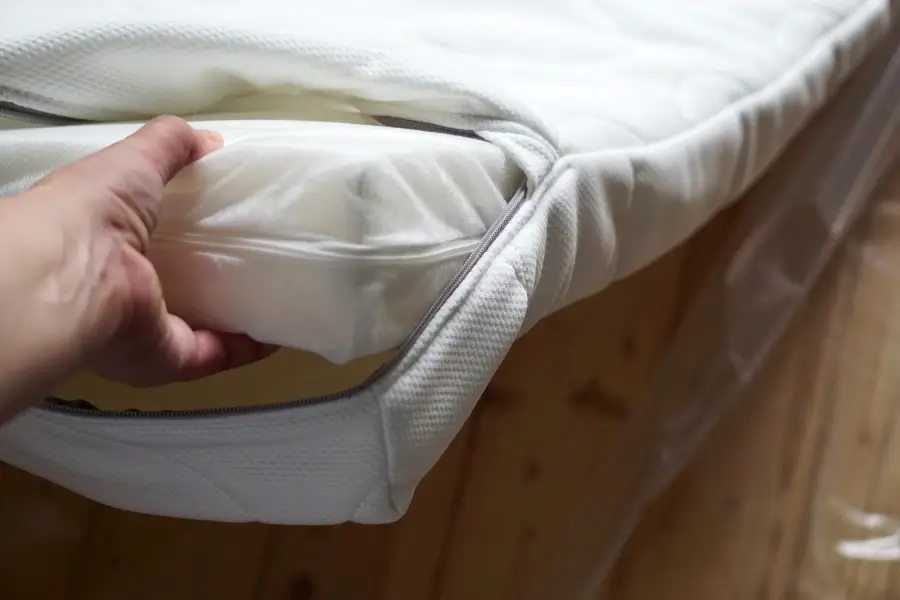
Types of Crib Mattresses & Sizes
Understanding the materials and sizes is the first step to a safe nursery.
- Standard Crib Mattress: The most common size (approx. 28″ x 52″). Fits standard cribs and many toddler beds.
- Mini Crib & Cradle Mattresses: Essential for smaller spaces. While often grouped together, a best cradle mattress candidate will be smaller (typically 18″ x 36″) than a mini crib mattress (24″ x 38″). Always measure your infant bed mattress frame before buying.
- Foam Crib Mattress: Lightweight and affordable. Look for high-density foam that is CertiPUR-US® certified.
- Innerspring Crib Mattress: The traditional choice using steel coils. These are heavy and durable, offering excellent support for toddlers who stand and jump.
- Organic Crib Mattress: Made with non-toxic materials like coconut coir and organic cotton. Naturally flame-resistant and ideal for eco-conscious families.
Price Guide: What Do You Get for Your Money?
Crib mattresses range from $50 to $400+. Here is what to expect at each tier:
- Budget ($50 – $100): Basic foam mattresses. Lightweight and functional, but often lack waterproofing (requiring a separate cover) and may have simpler vinyl covers.
- Mid-Range ($100 – $250): The “sweet spot” for most families. You typically get dual-sided designs (infant/toddler), higher-density foam or quality innersprings, and built-in waterproof barriers.
- Premium ($250+): Advanced features like washable cores (e.g., Newton mattresses), 100% organic materials (e.g., Naturepedic), or “breathable” technology. These are investments in longevity and chemical-free safety.
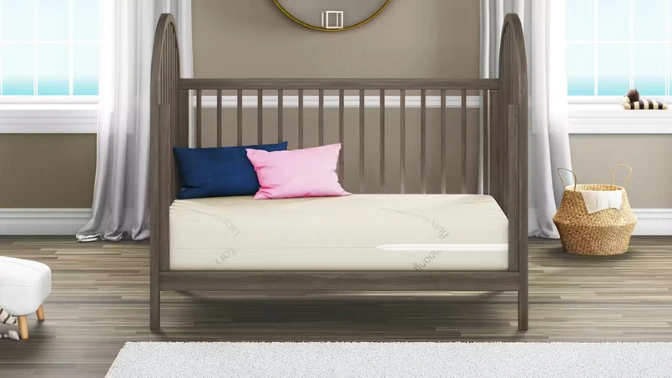


 Check Price


More details
 Dual-sided infant and toddler design
Extra-firm, baby-safe sleep surface
Breathable organic materials
Excellent durability and structure
Long trial and lifetime warranty
Dual-sided infant and toddler design
Extra-firm, baby-safe sleep surface
Breathable organic materials
Excellent durability and structure
Long trial and lifetime warranty
 Premium upfront price
Heavier than foam crib mattresses
Available in one standard size only
Premium upfront price
Heavier than foam crib mattresses
Available in one standard size only

More details
GOTS-certified Organic, safe materials
Waterproof cover with sealed seams
AAP-aligned firmness to support infant development
100-day money-back guarantee with free returns
2-sided option for both infant and toddler stages
Pricier than other brands
The coil spring model is heavy
Benefits of Buying a Baby Mattress Online
Dragging a heavy mattress home from a store is a hassle. Buying online offers distinct advantages for busy parents:
- Home Trials: You can’t “test” a baby mattress in a store. Online brands offer risk-free trials (e.g., 100 nights) so you can ensure it fits your crib snugly before committing.
- Safety Transparency: Online product pages typically list exact certifications (like Greenguard Gold) and firmness ratings that are often missing from store tags.
- Convenience: The mattress arrives at your door, often as a crib mattress in a box, making it easy to set up in the nursery.
Key Safety Features to Look For
When comparing the best baby mattresses, prioritize these safety metrics:
- The “Two-Finger” Test: There should be no more than a two-finger gap between the mattress and the crib frame to prevent entrapment.
- Firmness: Soft surfaces are a hazard. A safe newborn mattress should feel very firm to an adult. If it leaves an indentation when you press down, it is too soft.
- Waterproofing: Look for a built-in waterproof barrier or a washable cover to prevent mold growth inside the core.
- Square Corners: Mattresses with square corners fit tighter into a standard crib than those with rounded corners, reducing safety gaps.
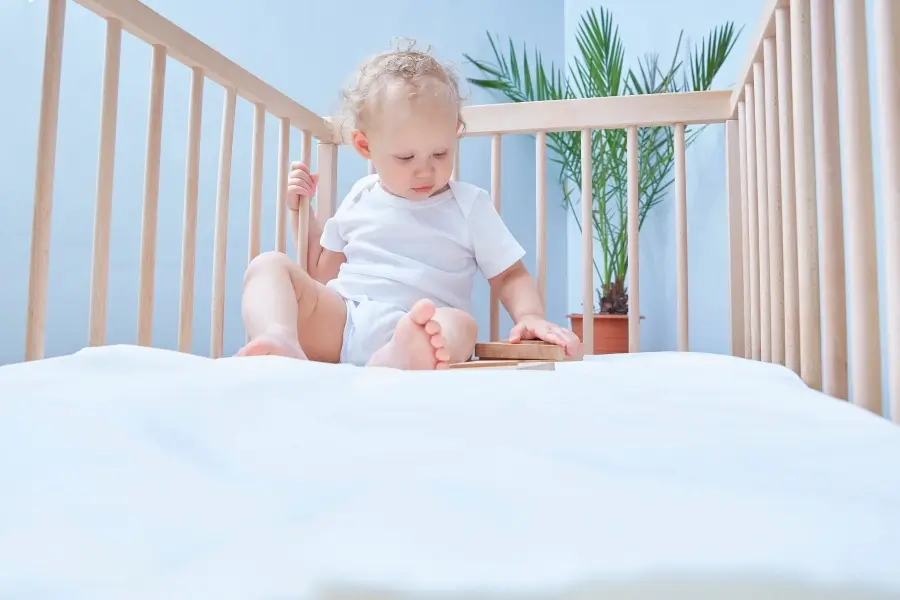
Decoding Safety Labels: What Do They Actually Mean?
When shopping, you will see a lot of “green” badges. Here is what matters for your baby’s health:
- Greenguard Gold: The gold standard for indoor air quality. It means the mattress has been tested for over 10,000 chemicals and volatile organic compounds (VOCs) that can pollute nursery air.
- CertiPUR-US®: Essential for foam mattresses. It certifies the foam is made without ozone depleters, mercury, lead, formaldehyde, or heavy metals.
- GOTS (Global Organic Textile Standard): The highest standard for organic fibers. If a mattress claims to be “organic,” look for this logo to ensure at least 95% certified organic fibers are used.
- JPMA Certified: Indicates the mattress has been tested by an independent lab to verify it meets or exceeds ASTM safety standards.
Pro-Tips: Caring for Your Crib Mattress
Extend the life of your mattress with these simple maintenance tips:
- Use a Mattress Protector: Even if your mattress is “waterproof,” a removable, machine-washable waterproof protector is easier to clean at 3 AM than scrubbing the mattress itself.
- Rotate Regularly: To prevent “dips” or soft spots where your baby’s head rests, rotate the mattress 180 degrees every time you change the sheets.
- Air It Out: When you change the bedding, let the mattress “breathe” uncovered for 15-20 minutes to dissipate any trapped moisture or humidity.
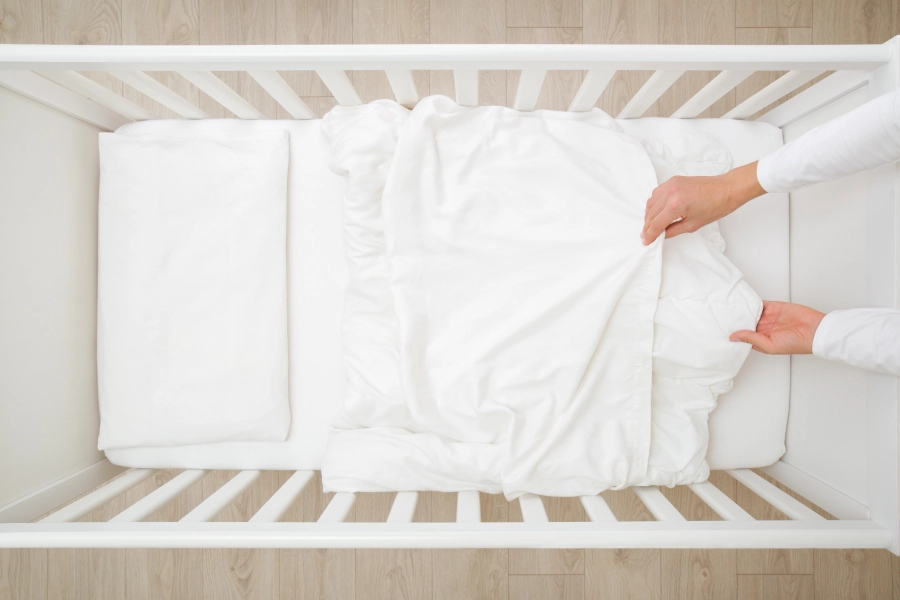
Final Thoughts
Your baby’s safety is our top priority. A well-chosen crib mattress supports their physical development and keeps them safe while you rest. Whether you choose a washable crib mattress for hygiene or an organic baby mattress for purity, our reviews are here to help you decide. Check out our expert rankings below to find the perfect fit for your nursery.
Frequently Asked Questions
Q. What is the standard crib mattress size?
A. A standard crib mattress must measure at least 27 ¼ inches wide by 51 ⅝ inches long, with a thickness not exceeding 6 inches. This standardized size is required by law to ensure the mattress fits safely into any full-size crib without leaving dangerous gaps.
Q. When should I flip my crib mattress to the toddler side?
A. Most dual-sided crib mattresses are designed to be flipped around 12 months of age. Always check with your pediatrician first, but generally, once your baby is one year old, it is safe to transition from the ultra-firm infant side to the softer toddler mattress side.
Q. Why are crib mattresses so firm?
A. Safety. Soft surfaces increase the risk of SIDS (Sudden Infant Death Syndrome) and suffocation. A safe infant mattress must be firm enough that it does not conform to the shape of the baby’s head. If it feels “rock hard” to you, it is likely perfect for your newborn.
Q. How do I clean a crib mattress?
A. The best method is prevention: use a waterproof crib mattress cover. If a leak occurs, wipe the surface with a damp cloth and mild soap. Some advanced models, like the Newton mattresses, have a core that is 100% washable in the shower for deep cleaning.
Q. Is a foam or innerspring crib mattress better?
A. Both are safe if they are firm. Foam mattresses are much lighter (8-13 lbs), making them easier to lift for sheet changes. Innerspring mattresses are heavier (15-30 lbs) but tend to be more durable and can withstand a jumping toddler better over several years.
