

Why Is My Mattress Sagging in the Middle? (And 3 DIY Fixes)
Daniel Zvi
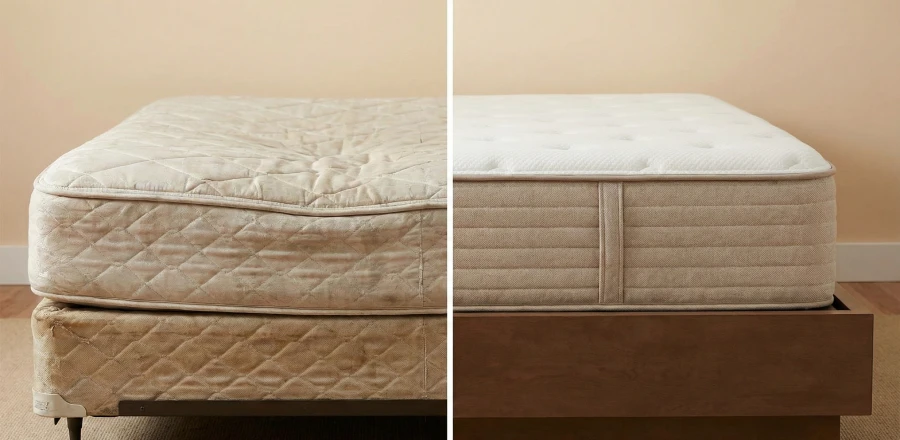
Mattress sagging is the structural failure of a bed's support core, resulting in a visible depression—usually in the center—that creates an "un-level" sleeping surface. The main benefit of identifying this early is preventing chronic spinal misalignment and ensuring your warranty claim remains valid before the damage becomes permanent.
If you feel like you are rolling into a "taco" or waking up with lower back stiffness, your bed has likely lost its structural integrity. While no DIY trick is permanent, specific strategies can extend your bed's life by a few months.
Why Does a Mattress Sag? (The Science of Wear)
Before you can fix the problem, you must understand the source. Sagging rarely happens overnight; it is a gradual breakdown of materials.
- Material Fatigue (Foam & Springs) Most modern mattresses use polyurethane foam or memory foam. Over time, the cellular structure of the foam collapses under the heaviest part of your body (the hips and shoulders). In innerspring models, steel coils lose their "tensile strength" and fail to rebound fully after you get up.
- Improper Foundation Support A mattress is only as good as what it sits on. If you are using an old box spring with a new memory foam mattress, or if your bed frame slats are more than 3 inches apart, the mattress will dip through the gaps. This is often the number one reason for premature sagging.
- Liquid Damage Even invisible moisture from sweat can degrade foam layers over years, causing them to soften and lose support (Indentation Load Deflection).
The Hidden Costs of Ignoring a Sagging Mattress
It is not just about comfort; it is about health. Ignoring a dip deeper than 1 inch can lead to:
- Chronic Lordosis: An excessive inward curve of the spine.
- Sleep Fragmentation: Tossing and turning because your body cannot find a neutral position.
- Warranty Voiding: Most warranties require you to report sagging before it gets too bad. If you wait until the cover rips or the sag is too deep, manufacturers may deny the claim.
 Our top picks for April 2026
 9.9
9.9


 Memory Foam


How Do I Fix a Sagging Mattress? (Step-by-Step)
If you aren't ready to buy a new bed today, use these three temporary methods to "shore up" the support.
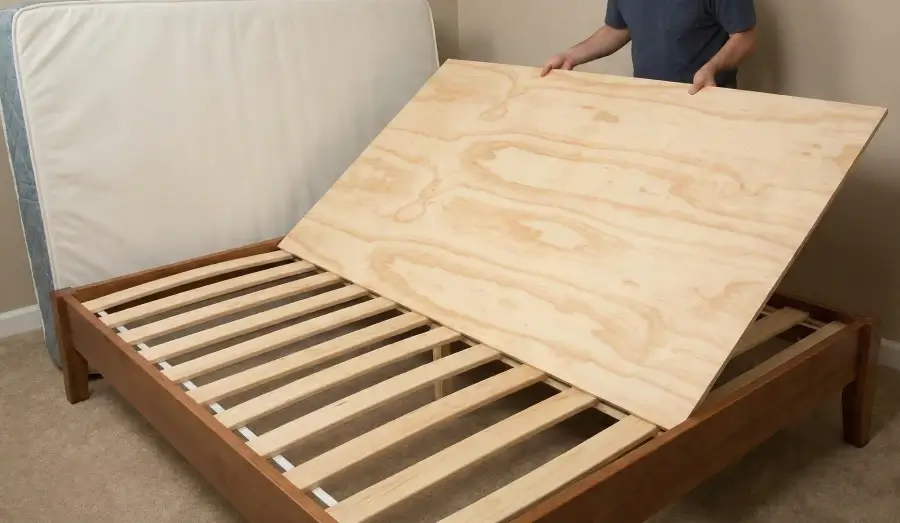
1. The "Plywood Reinforcement" Trick
This is the most effective DIY solution for a mattress that is sagging due to a weak foundation.
- Measure Your Bed Frame: Remove the mattress and measure the area inside the frame lips.
- Purchase Plywood: Go to a hardware store and buy a sheet of 0.75-inch thick moisture-resistant plywood. Have it cut to fit your frame dimensions.
- Install the Board: Place the plywood sheet directly over your slats or box spring.
- Replace the Mattress: Place the mattress back on top. The rigid wood provides a solid, unyielding surface that prevents the mattress from dipping between slats.
2. Rotate (and Flip) the Mattress
Most people forget this maintenance step.
- Check the Tag: Ensure your mattress is not "one-sided" (many pillow-tops are). If it is one-sided, do not flip it upside down; only rotate it.
- Rotate 180 Degrees: Spin the mattress so the foot becomes the head. This moves the heavy compression zones (hips) to a fresh area of foam that hasn't been crushed yet.
- The Result: You may feel an "unevenness" at your feet for a few days, but your back will have fresh support.
3. The "Under-Mattress" Pillow Method
Use this for immediate, single-night relief only.
- Locate the Sag: Run a broom handle or straight edge across the bed to find the deepest point of the dip.
- Insert Support: Lift the mattress and place relatively flat, firm pillows underneath the mattress (between the mattress and the box spring) directly centered under the dip.
- Test: Lie down. The pillows push the saggy area up. Warning: This can create a "hump" if the pillows are too thick, so use thin pillows or folded towels.
The Repair Toolkit: Essential Materials
To diagnose and temporarily manage sagging effectively, you need more than just guesswork. Here is the recommended list of tools and items:
- A Rigid Straight Edge (Yardstick/Broom): Essential for measuring the depth of the sag to see if you qualify for a warranty claim (usually 1.5 inches).
- Moisture-Resistant Plywood: As mentioned, the gold standard for DIY support.
- Mattress Helpers (Commercial Inserts): Products like Mattress Helper or No Sags are foam inserts specifically designed to slide under the mattress to lift dips.
- Waterproof Mattress Protector: Essential for your next mattress to prevent sweat from breaking down the foams again.
What Are the Mistakes to Avoid?
Trying to fix a mattress incorrectly can destroy it faster. Avoid these three common pitfalls:
- Adding a Soft Topper to "Fix" Sagging This is the most common error. Buying a soft memory foam topper will not fix a sag; the topper will simply contour to the dip, and you will still sink. You need support (underneath), not comfort (on top).
- Flipping a "No-Flip" Mattress Modern hybrid and memory foam mattresses are designed with a specific "support layer" at the bottom and "comfort layers" at the top. Flipping them upside down means you are sleeping on hard, high-density base foam, which is uncomfortable and creates pressure points.
- Ignoring the "Slat Gap" Rule If your bed frame has slats that are 4 or 5 inches apart, no mattress will survive. The foam will push through the gaps. You must ensure slats are no more than 2.75 to 3 inches apart.
Can a New Mattress Solve This Forever?
Manual fixes like plywood and pillows are temporary "band-aids." They do not restore the dead foam cells or broken springs inside the bed. If your mattress is over 7 years old or the sag is deeper than 1.5 inches, the only permanent fix for your back pain is a mattress designed with reinforced center support.
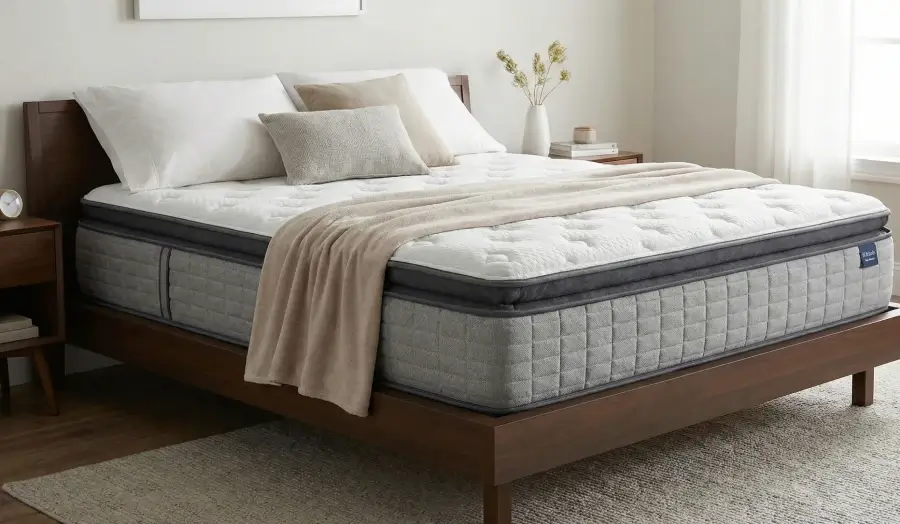
High-Durability Solutions: If you are tired of waking up sore, look for mattresses that use High-Density Foams or Zoned Coil Systems. See how durability compares in our DreamCloud vs. Nectar showdown to spot the difference between cheap and quality foam.. These beds place stronger steel coils in the center third of the mattress (where your hips go) to prevent exactly this problem.
- For Heavy Duty Support: The [Titan Plus] is specifically engineered with industrial coils to never sag, even for heavier sleepers.
- For Luxury Durability: The [Saatva Classic] uses a "spinal zone" active wire and dual-coil system designed to maintain shape for 10-15 years.
Our top picks for April 2026

FAQs: Sagging & Warranty Questions
Q: Will a warranty replace a sagging mattress?
A: Yes, but strictly based on depth. Most standard warranties (like Nectar or Helix) require a visible indentation of 1.5 inches or more when no weight is on the bed. If it sags only when you lie on it, it is considered "normal wear."
Q: Can a box spring cause the mattress to sag?
A: Absolutely. If the box spring has broken coils or a bowed wooden frame, the mattress will conform to that shape. Always check your foundation before blaming the mattress.
Q: How long should a memory foam mattress last before sagging?
A: A high-quality memory foam mattress should last 7–10 years. Lower quality "bed-in-a-box" options with low-density foams (under 1.5 lb/ft³) may start sagging in as little as 3–4 years.
Q: Does a mattress topper help a sagging mattress?
A: Generally, no. A topper adds cushion, not structural support. It will follow the contours of the sag underneath it.
Liked this article?
Daniel Zvi
Smart Recommendations


Thank you!