

Why Am I Sweating in My Sleep? (It’s Likely Your Mattress)
Daniel Zvi
 143
143
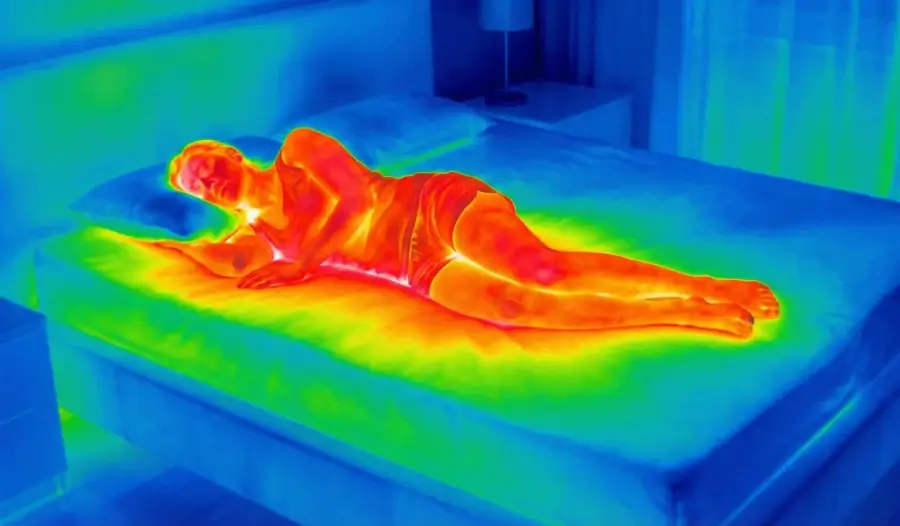
If you are waking up at 3:00 AM, kicking off the covers, drenched in sweat, your first instinct might be to blame your body (hormones, diet, or illness). But before you call the doctor, you should audit your bed.
For millions of sleepers, the culprit is Heat Retention. Most modern mattresses—especially "bed-in-a-box" memory foam models—are designed to insulate heat rather than disperse it.
This guide will help you determine if your mattress is the problem and how to fix it without blasting the AC all night.
The Science: Why Memory Foam "Bakes" You
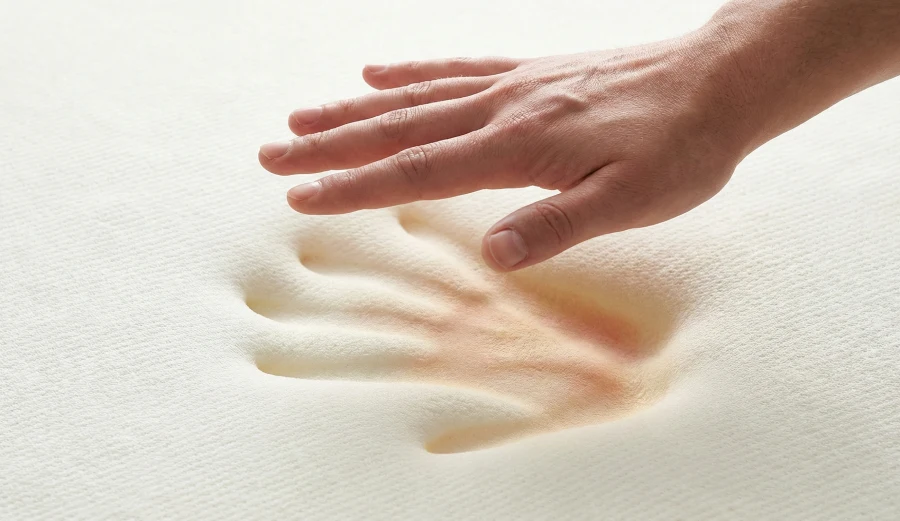
Memory foam is a dense, viscoelastic polyurethane. It works by reacting to your body heat to soften and mold around your curves.
The Problem: Because the foam is so dense, it lacks Airflow.
- Absorption: The foam absorbs your body heat (98.6°F) to function.
- Trapping: Once it absorbs that heat, the dense cell structure traps it directly underneath you.
- Reflection: After a few hours, the mattress becomes hotter than your skin, reflecting that heat back at you. This creates a "micro-climate" oven effect.
 Our top picks for April 2026
 9.9
9.9


 Memory Foam


The Diagnosis: The "Hand Print Test"
How do you know if it's the mattress or just a hot room? Try this simple test.
- Press Down: Place your hand firmly on the mattress for 30 seconds.
- Remove & Wait: Take your hand away and hover it over the spot.
- Feel the Heat: Does the spot radiate heat back at your palm for more than 10-15 seconds?
If the mattress holds that heat aggressively, imagine what happens when your entire body is lying there for 8 hours. If you fail this test, your bed is a "heat trap."
3 Ways to Fix a Hot Mattress (From Cheap to Expensive)
If you aren't ready to buy a new bed today, try these retrofits to improve airflow.
1. Change Your "Skin" (The Sheets)
Microfiber sheets (which are essentially polyester plastic) are the worst offenders. They breathe poorly.
- The Fix: Switch to Percale Cotton or Bamboo/Tencel sheets. These natural fibers are porous and wick moisture away rather than trapping it against the foam.
2. Create a Buffer (The Topper)
You need a layer of air between you and the memory foam core.
- The Fix: A Latex Topper or a Wool Mattress Pad. Unlike memory foam, latex has an open-cell structure that allows air to circulate. Wool is nature's temperature regulator—it keeps you cool in summer and warm in winter.
3. Lift the Foundation
If your mattress is sitting on a solid plywood board or the floor, heat has nowhere to escape downwards.
- The Fix: Ensure your bed frame has Slats (spaced 2-3 inches apart). This allows the bottom of the mattress to "breathe" and release the heat core.
The Permanent Solution: Airflow is King
If you have tried bamboo sheets and cooling pads and you are still sweating, the issue is structural. You cannot force a solid block of foam to breathe.
To sleep cool permanently, you need Airflow, not just "cooling gel."
Why Hybrids Are the Answer
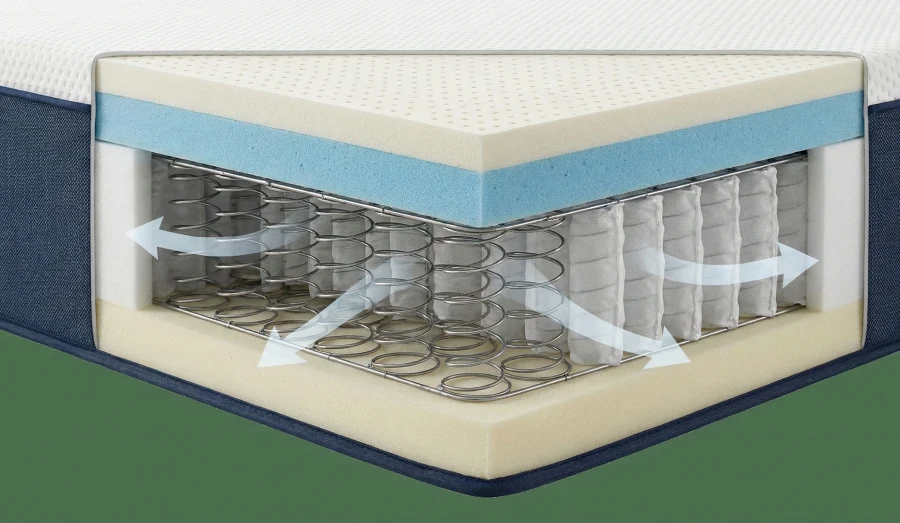
Hybrid Mattresses replace the dense support foam with a layer of Steel Coils.
- The Engine: The space between the coils is essentially 90% air. Every time you move, the coils compress and pump hot air out of the mattress while drawing fresh, cool air in.
- The Result: Hybrids sleep 2-5 degrees cooler than all-foam beds simply due to physics.
Our Top Picks for Hot Sleepers
If you are ready to stop sweating, look for beds specifically designed for thermal regulation.
- The Cooling Specialist: DreamCloud is famous for its "cool-to-the-touch" cover that feels like cold marble.
- The Natural Cool: For a chemical-free option, the Saatva uses organic wool and latex to naturally regulate humidity.
- The Heavy-Duty Cool: If you are a heavier sleeper (who naturally generates more heat), the Titan Plus uses industrial coils to maximize airflow and support.
Our top picks for April 2026


FAQs: Sleeping Hot
Q: Do "Cooling Gels" actually work?
A: Yes, but usually only for the first 15-20 minutes. Gel conducts heat away from your skin initially, but once the gel warms up to your body temperature, it stops working. This is why Airflow (Coils) is more important than Gel.
Q: Why do I only sweat at 3 AM?
A: This is when your body enters REM sleep and your temperature regulation shuts down temporarily. If your mattress has been storing heat for 4 hours, this is the "tipping point" where the bed becomes hotter than you.
Q: Is latex cooler than memory foam?
A: Yes. Latex vs. Memory Foam is a common debate, but latex is naturally aerated (it has pinholes from the manufacturing process), making it significantly more breathable than viscoelastic foam.
Liked this article?
Daniel Zvi
Smart Recommendations


Thank you!